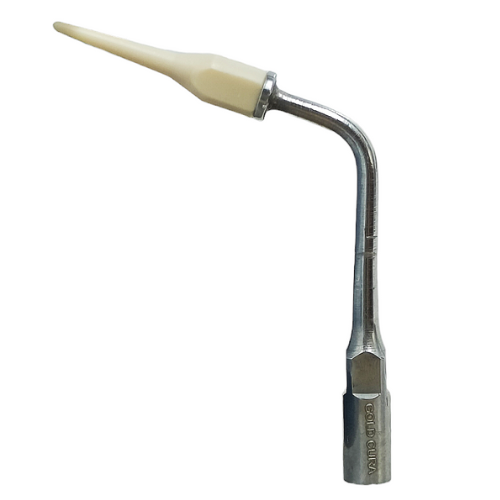
Gold Cura
Gold Cura ICP PEEK Implant Cleaning Tip – Woodpecker & EMS Compatible
Low stock
Couldn't load pickup availability
Direct answer: The Gold Cura ICP ultrasonic implant-cleaning tip uses a PEEK working end for controlled professional maintenance around implant collars, abutments, crowns, bridges and veneers. It is intended to assist with the removal of plaque, biofilm, light stains, soft deposits and accessible residual debris. It is designed for Woodpecker and EMS-type screw-in piezoelectric handpieces, subject to confirmation of the exact handpiece model and thread.
ICP PEEK Implant Cleaning Tip: Key Details
| Model | ICP |
|---|---|
| Product category | Ultrasonic implant-maintenance scaler tip |
| Working end | PEEK non-metal contact surface |
| Primary use | Implant, abutment and restoration maintenance |
| Suitable deposits | Plaque, biofilm, light stains, soft deposits and accessible residual debris |
| Compatibility | Woodpecker and EMS-type screw-in piezoelectric handpieces |
| Pack contents | 1 Gold Cura ICP implant-cleaning tip assembly |
| Intended user | Trained dental professionals |
What Is the ICP Ultrasonic Tip Used For?
- Professional maintenance around implant collars and abutments.
- Controlled plaque and biofilm removal around implant-supported restorations.
- Cleaning around crowns, bridges and veneers where a non-metal working end is clinically preferred.
- Removal of light stains, soft deposits and accessible residual debris from suitable restorative surfaces.
- Peri-implant maintenance as part of an appropriate professional hygiene protocol.
ICP is not primarily a heavy-calculus tip. Dense or firmly attached deposits may require another clinically appropriate instrument.
Why Use a PEEK Working End?
PEEK is used in implant-maintenance instruments to provide a non-metal contact surface for controlled cleaning around titanium and restorative materials. This reduces direct metal-to-metal contact, but it does not make the procedure risk-free. Surface effects still depend on power, pressure, angle, deposit type and clinical technique.
ICP vs Regular Metal Scaler Tips
| Tip type | Working surface | Typical use | Deposit selection |
|---|---|---|---|
| ICP implant-cleaning tip | PEEK working end | Implant collars, abutments and suitable restorative surfaces | Plaque, biofilm, light stains and soft deposits |
| P1 periodontal tip | Metal working end | Periodontal and subgingival scaling on suitable natural-tooth surfaces | Plaque and clinically appropriate calculus |
| G1 / G2 general scaler tips | Metal working end | Routine scaling on suitable natural-tooth surfaces | General calculus and deposits according to the selected tip |
Use ICP when a non-metal contact surface is preferred for suitable implant or restorative maintenance. For routine natural-tooth scaling, select an appropriate periodontal or general scaling tip.
Woodpecker and EMS Compatibility
This listing is designed for Woodpecker and EMS-type screw-in piezoelectric handpieces. Compatibility depends on the exact handpiece connection and thread, not only the scaler brand. Confirm the scaler model and handpiece before ordering.
Professional Use and Safety
- Use only with professional implant-maintenance training and adequate access and visibility.
- Follow the tip and scaler instructions for operating mode, power and irrigation.
- Use light, controlled strokes and avoid excessive pressure.
- Do not use the tip as a substitute for a heavy-calculus instrument.
- Inspect the working end and holder before use and do not use a worn, loose, cracked or damaged component.
- Follow the supplied instructions for cleaning, disinfection, sterilisation and any permitted reprocessing.
- Do not assume that the holder and PEEK working component have identical processing requirements.
Frequently Asked Questions
What is the ICP ultrasonic implant cleaning tip used for?
The ICP tip is intended for professional maintenance around implants, abutments and suitable restorative surfaces, including controlled removal of plaque, biofilm, light stains, soft deposits and accessible residual debris.
Is the ICP PEEK tip suitable for titanium implants?
It is intended for selected implant-maintenance procedures. Its PEEK working end reduces direct metal-to-metal contact, but surface effects still depend on power, pressure, angle, deposit type and clinical technique.
Can the ICP tip be used around veneers, crowns and bridges?
It may be selected for controlled cleaning around suitable veneers, crowns, bridges and implant-supported restorations when a non-metal working end is clinically preferred.
Is the ICP tip the same as a regular metal scaler tip?
No. ICP uses a PEEK working end and is positioned for implant and restoration maintenance. Regular P1, G1 and G2 tips use metal working ends and are selected for suitable periodontal or general scaling applications.
Can the ICP tip remove heavy calculus?
The ICP tip is mainly intended for plaque, biofilm, light stains and soft deposits around implants and restorations. Dense or firmly attached calculus may require another clinically appropriate instrument.
Is the ICP tip compatible with Woodpecker and EMS scalers?
This listing is designed for Woodpecker and EMS-type screw-in piezoelectric handpieces. Confirm the exact scaler model, handpiece and thread before ordering.
How should the ICP tip be cleaned and sterilised?
Follow the instructions supplied with the product and ultrasonic scaler. Do not assume a standard autoclave cycle, because the holder and PEEK working component may have different processing requirements.
What comes in the package?
The package contains one Gold Cura ICP implant-cleaning tip assembly as shown in the product listing.
Related Gold Cura Products
- Woodpecker and EMS P1, G1 and G2 scaler tips
- Assorted pack of 5 Woodpecker and EMS scaler tips
- Universal prosthetic implant driver kit
- View all periodontics and scaling products
Professional-use dental instrument. Confirm compatibility and follow the supplied instructions for operating settings, irrigation, infection control and processing before clinical use.