Gold Cura
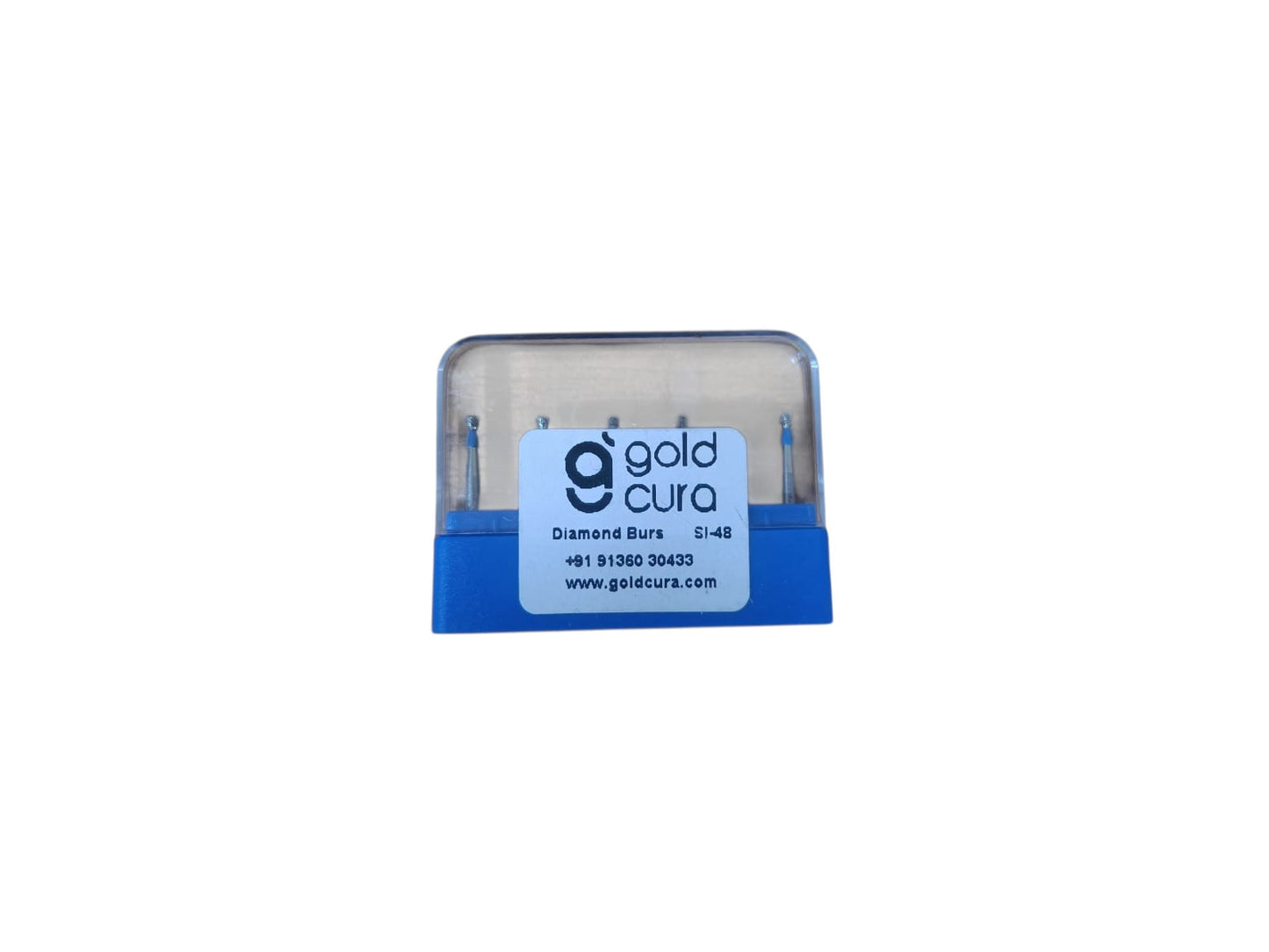
Gold Cura Inverted Cone Diamond Burs FG – SI-46 to SI-48, Pack of 5
Low stock
Couldn't load pickup availability
In stock. Estimated delivery within 4–5 working days.
Quick Answer
FG inverted-cone diamond burs for selected retentive cavity features, occlusal locks, undercuts and flat internal-floor refinement. Choose one SI code; pack of 5 identical burs.
Direct answer: Gold Cura Inverted Cone Diamond Burs FG are friction-grip diamond burs for creating retentive features, flattening selected cavity floors and shaping occlusal locks or undercuts where clinically indicated. Choose SI-46, SI-47 or SI-48. Each order contains 5 identical burs of the selected code.
Inverted Cone Diamond Burs: Key Facts
| Available codes | SI-46, SI-47 and SI-48 |
|---|---|
| Head shape | Inverted cone / single inverted cone |
| Typical applications | Retentive cavity form, occlusal locks, undercuts and selected pulpal or gingival floor refinement |
| Shank | FG / friction grip |
| Pack size | 5 identical burs of the selected SI code |
| Intended user | Trained dental professionals |
What Is an Inverted Cone Diamond Bur?
An inverted cone bur has a narrower neck and a wider cutting end. This geometry can create a flat-ended internal form and a controlled retentive feature. Because the head can generate undercuts quickly, it should be used only where the restorative design requires retention and with continuous awareness of remaining tooth structure.
When to Use SI-46, SI-47 and SI-48
Comparable catalogues commonly map SI-46, SI-47 and SI-48 to progressively wider heads. Published references often associate them with approximately 1.2 mm, 1.4 mm and 1.6 mm diameters respectively, but those values are not presented as confirmed Gold Cura dimensions.
| Code | Relative size | When to use it |
|---|---|---|
| SI-46 | Smallest / narrowest | Choose for conservative retentive features, small cavities, localised occlusal locks and narrow internal areas where minimal enlargement is required. |
| SI-47 | Intermediate | A general-purpose choice for routine restorative retention, moderate floor refinement and occlusal or proximal box shaping. |
| SI-48 | Largest / widest | Choose for broader retentive form, larger posterior cavities and wider floor or wall refinement when the preparation design justifies the additional diameter. |
Simple selection rule: use the smallest inverted cone that creates the required retentive form without unnecessarily weakening enamel or dentin.
Inverted Cone vs Round and Straight Fissure Burs
| Shape | Primary effect | Common selection reason |
|---|---|---|
| Inverted cone | Creates a flat-ended internal form and potential undercut | Retentive cavity features and occlusal locks |
| Ball round | Creates rounded access and concave contour | Initial entry, cavity extension and rounded internal shaping |
| Straight fissure | Creates straight walls and a flat terminal form | Box preparation and parallel-wall shaping |
How to Use an Inverted Cone Bur Safely
- Confirm that retention is required. Adhesive preparations may not need traditional mechanical undercuts.
- Select the smallest suitable SI size. Avoid creating a wider internal form than the restoration requires.
- Control depth and lateral movement. The wider terminal head can rapidly undermine unsupported structure.
- Use suitable cooling, speed and light pressure. Follow the supplied Gold Cura instructions.
- Inspect the final internal form. Remove unsupported enamel and verify that the preparation matches the restorative plan.
Frequently Asked Questions
What are inverted cone diamond burs used for?
They are commonly used to create retentive cavity features, occlusal locks, selected undercuts and flat internal floors.
What is the difference between SI-46, SI-47 and SI-48?
They are progressively wider inverted-cone profiles: SI-46 is the most conservative, SI-47 is intermediate and SI-48 is the broadest.
When should I use SI-46?
Use SI-46 for small cavities and conservative localised retention.
When should I use SI-47?
Use SI-47 for routine moderate retentive preparation and general restorative floor refinement.
When should I use SI-48?
Use SI-48 for larger preparations where a broader retentive feature is clinically justified.
Are inverted cone burs always required for composite preparations?
No. Modern adhesive preparations may not require mechanical undercuts. Select the shape according to the restorative material and treatment plan.
Is this a mixed pack?
No. Each pack contains five burs of the selected SI code.
What are the exact dimensions?
Comparable catalogues publish common SI references, but confirm the Gold Cura dimensions from the packaging or technical documentation.
Can these burs be sterilised and reused?
Follow the supplied cleaning, sterilisation, reuse and replacement instructions.
Related Gold Cura Dental Burs
- Ball Round Diamond Burs FG
- Straight Fissure Diamond Burs FG
- Tapered Fissure Diamond Burs FG
- Dental Burs & Bur Kits
Professional-use dental instrument. Confirm the actual dimensions, speed, cooling and processing instructions before clinical use.
Browse related products: Dental Diamond Burs.
Selection help: Compare inverted cone, ball round, TF, CF and other profiles in the Dental Diamond Bur Shapes & Grit Selection Guide.
Why Dentists Choose This Product
- FG inverted-cone diamond burs for selected retentive cavity features, occlusal locks, undercuts and flat internal-floor refinement. Choose one SI code; pack of 5 identical burs.
- Compatibility: For a suitable high-speed FG / friction-grip dental handpiece. Mechanical retention is not required for every adhesive preparation; select the profile according to the restorative material and treatment plan.
- Package: 1 × pack containing 5 items as specified
Delivery and Returns
Estimated delivery is within 4–5 working days. Eligible return requests must be raised within 24 hours of delivery and remain subject to Gold Cura’s return policy. Used, contaminated, opened hygiene-sensitive or sterilized items are not returnable.