Gold Cura
Gold Cura Short Shank FG Diamond Burs – 10 Shapes, Pack of 5
Low stock
Couldn't load pickup availability
In stock. Estimated delivery within 4–5 working days.
Quick Answer
Compact short-shank FG diamond burs for posterior access, restricted mouth opening and paediatric cases. Choose one of 10 profiles; pack of 5 identical burs.
Direct answer: Gold Cura Short Shank FG Diamond Burs are compact friction-grip burs designed for better access in posterior teeth, limited-mouth-opening cases, paediatric dentistry and other restricted working spaces. Choose from 10 short-shank profiles across ball round, straight fissure, inverted cone, taper flat-end and taper round-end shapes. Each order contains 5 identical burs of the selected code.
Short Shank FG Diamond Burs: Key Facts
| Bur category | Short-shank FG / FGSS dental diamond burs |
|---|---|
| Available codes | BR-S41, BR-S45, BR-S46, SF-S41, SI-S46, TF-S20, TF-S21, TF-S23, TR-S21 and TR-S23 |
| Shape families | Ball round, straight flat-end, inverted cone, taper flat-end and taper round-end |
| Shank type | FG / friction grip, short-shank format |
| Compatible handpiece | Suitable high-speed friction-grip dental handpiece |
| Pack size | 5 identical burs of the selected code |
| Primary advantage | Improved manoeuvrability where a standard-length FG bur is difficult to position |
| Intended user | Trained dental professionals |
What Is a Short Shank FG Diamond Bur?
A short-shank FG bur has a reduced overall length compared with a standard friction-grip bur. The compact format can improve handpiece positioning, visibility and control in the posterior region, in patients with restricted mouth opening and in smaller oral cavities.
The short shank changes access, not the cutting geometry. The prefix—BR, SF, SI, TF or TR—identifies the head shape. The remaining code identifies the particular profile within that family.
When Are Short Shank Burs Most Useful?
- Posterior cavity, inlay, onlay and crown-preparation access
- Patients with limited mouth opening
- Paediatric and smaller-mouth clinical situations
- Restricted inter-arch clearance
- Areas where a standard-length bur causes the handpiece head to contact the opposing arch or soft tissues
- Procedures requiring a compact instrument for controlled access
When to Use Each Short Shank Bur Size
Important: the number is not a universal “small-to-large” scale across different shape families. Compare codes only within the same prefix and select the required cutting geometry first.
| Code | Shape and relative profile | When to use it |
|---|---|---|
| BR-S45 | Small ball-round short-shank bur | Choose for conservative pinpoint entry, small cavity access, localised caries or restorative-material removal, and narrow endodontic, inlay or onlay access where a larger round head would remove unnecessary structure. |
| BR-S46 | Medium ball-round short-shank bur | Choose for general small-to-medium access preparation, controlled enlargement of an entry point, rounded internal form and posterior endodontic, inlay or onlay access when BR-S45 is too small. |
| BR-S41 | Larger ball-round short-shank bur | Choose for broader initial access, larger rounded internal contours and wider cavity, inlay, onlay or endodontic access when the clinical plan requires more efficient opening than BR-S45 or BR-S46. |
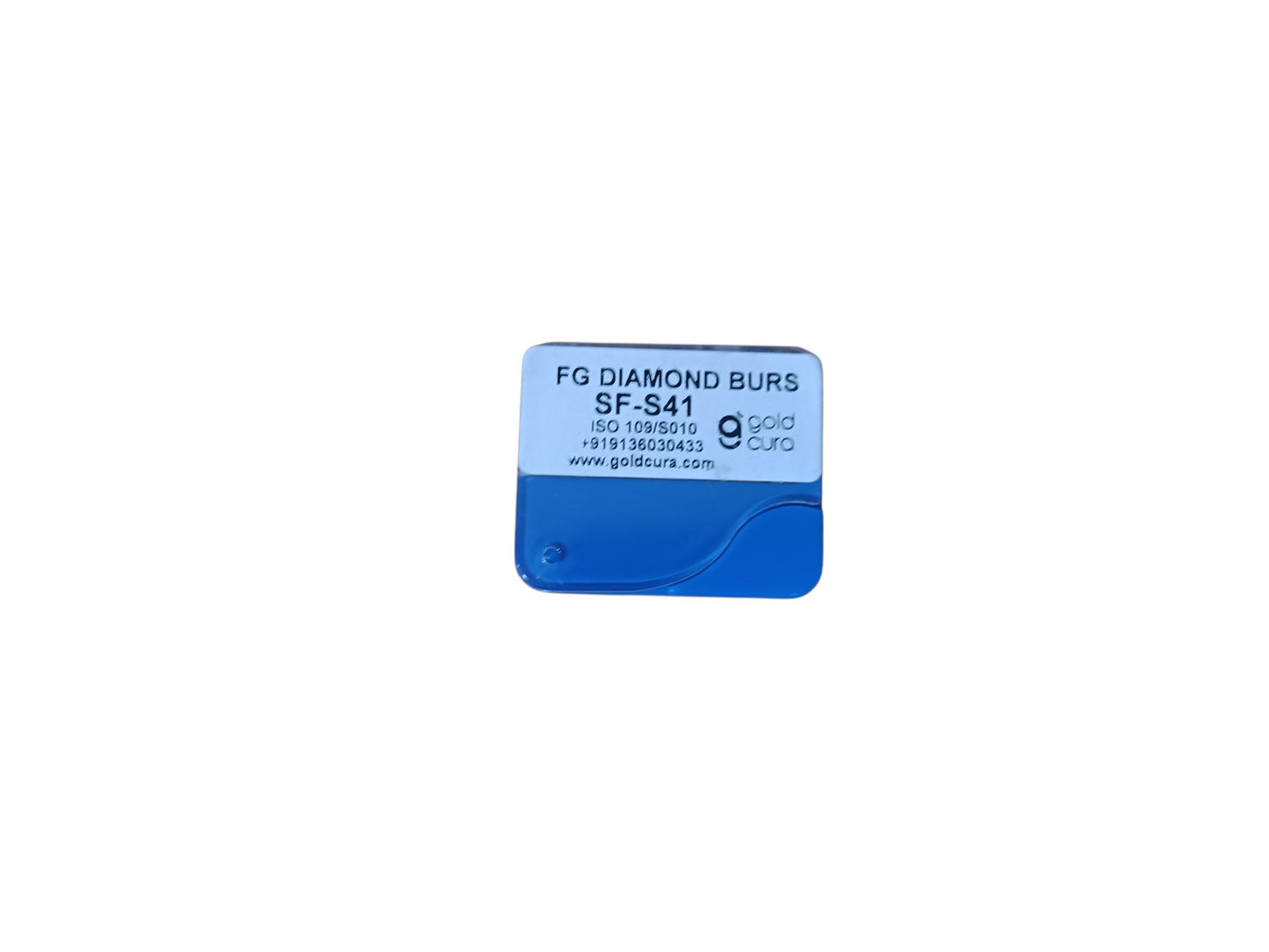
| SF-S41 | Straight flat-end / straight fissure profile | Choose for controlled straight-wall formation, flat internal floors, box preparation, endodontic access refinement, inlay preparation and margin refinement in restricted posterior spaces. |
| SI-S46 | Inverted-cone profile | Choose when an inverted-cone geometry is clinically required, including selected internal-floor flattening, inlay or onlay preparation and controlled retention features. Avoid creating unnecessary undercuts in adhesive preparations. |
| TF-S20 | Narrower, longer taper flat-end profile | Choose for conservative axial or proximal reduction, narrow inlay preparation, controlled wall taper and flat-ended margin formation where a slimmer working profile improves access. |
| TF-S21 | Medium-width, longer taper flat-end profile | Choose for general-purpose inlay and margin preparation, broader axial reduction and controlled flat-ended preparation when more width is required than TF-S20. |
| TF-S23 | Wider, more compact taper flat-end profile | Choose for broader but shallower posterior reduction, wider inlay or margin preparation and cases where a shorter working head is preferable to the longer TF-S20 or TF-S21 profile. |
| TR-S21 | Medium taper round-end profile | Choose for axial reduction, rounded internal line angles, crown or inlay preparation and margin refinement where a round-ended taper is preferred over a flat-ended TF shape. |
| TR-S23 | Compact, slimmer taper round-end profile | Choose for smaller teeth, localised axial reduction, shallow or conservative preparations and restricted posterior access where a compact rounded-end taper provides finer control than TR-S21. |
Simple selection rule: first choose the required shape—round, straight, inverted cone, taper flat-end or taper round-end—then choose the smallest profile that safely creates the planned preparation.
Short Shank Bur Shape Guide
| Prefix | Head shape | Typical selection |
|---|---|---|
| BR | Ball round | Initial access, rounded internal form and localised removal |
| SF | Straight flat-end / straight fissure | Straight walls, flat floors, boxes and margin refinement |
| SI | Inverted cone | Selected internal-floor and retention-form procedures |
| TF | Taper flat-end | Controlled tapered walls and flat-ended preparation geometry |
| TR | Taper round-end | Axial reduction with rounded internal line angles |
Short Shank vs Standard FG Diamond Burs
| Selection factor | Short shank FG | Standard FG |
|---|---|---|
| Access | Better for tight posterior spaces and restricted opening | Suitable where normal inter-arch clearance is available |
| Reach | Reduced reach | Greater reach for deeper or less restricted access |
| Handpiece positioning | Can reduce interference from the opposing arch | May be easier for routine, unrestricted preparations |
| Typical use | Posterior, paediatric and limited-opening cases | General restorative and prosthodontic procedures |
How to Choose the Correct Short Shank Bur
- Confirm that short-shank access is needed. Use it when a standard FG bur limits visibility, positioning or manoeuvrability.
- Select the head shape. Choose BR, SF, SI, TF or TR according to the planned preparation geometry.
- Select the relative size within that family. Do not compare the suffix number across unrelated prefixes.
- Confirm the intended finish line and internal form. Flat-ended TF and rounded-ended TR burs create different preparation geometry.
- Confirm grit separately. The shape code does not by itself guarantee the abrasive grade.
- Verify handpiece fit. These burs require a compatible high-speed friction-grip handpiece.
- Inspect the bur before use. Do not use a bur that is bent, damaged, corroded, worn or does not seat securely.
Clinical Applications by Shape
- Posterior cavity and indirect-restoration preparation
- Inlay and onlay access, wall formation and margin refinement
- Selected crown-preparation and axial-reduction procedures
- Endodontic access and access refinement with appropriate shapes
- Flat-floor and box preparation with straight or inverted-cone profiles
- Rounded internal line-angle preparation with taper round-end profiles
- Conservative entry and localised cutting with ball-round profiles
Grit, Dimensions and Processing Guidance
The product code primarily identifies the shape and relative profile. Do not assume the exact grit, head diameter, working length, maximum speed, sterilisation cycle or reuse limit from a competitor catalogue. Confirm these details from the Gold Cura packaging, supplier specification or instructions supplied with the product.
- Use appropriate water cooling, speed, pressure and intermittent cutting technique for the selected procedure.
- Follow the supplied cleaning, disinfection, sterilisation, reuse and replacement instructions.
- Replace a bur that is damaged, bent, corroded, visibly worn or no longer cuts efficiently.
- Use only by trained dental professionals.
Frequently Asked Questions
What is a short shank FG diamond bur?
It is a friction-grip dental diamond bur with a reduced overall length, designed to improve access and handpiece positioning in restricted working spaces.
What does FGSS mean?
FGSS commonly means friction grip short shank. It describes the shank length and handpiece connection, not the head shape.
When should I choose a short shank bur?
Choose it for posterior access, restricted mouth opening, paediatric cases, limited inter-arch clearance or whenever a standard-length FG bur interferes with handpiece positioning.
How many burs are included?
Each pack contains five identical burs of the selected code.
Is this a mixed pack?
No. Select one code, and the pack contains five burs of that selected profile.
Which round short-shank bur should I choose?
Use BR-S45 for the smallest conservative entry, BR-S46 for general small-to-medium access and BR-S41 for broader access and larger rounded internal contours.
What is the difference between TF-S20, TF-S21 and TF-S23?
TF-S20 is the slimmer long profile, TF-S21 is a broader long profile and TF-S23 is a wider, more compact profile for broader but shallower preparation.
What is the difference between TR-S21 and TR-S23?
TR-S21 is the broader general-purpose taper round-end option. TR-S23 is the more compact profile for smaller teeth, conservative preparation and restricted access.
When is SF-S41 used?
SF-S41 is selected for straight-wall formation, flat internal floors, box preparation, inlay preparation and margin refinement.
When is SI-S46 used?
SI-S46 is an inverted-cone profile for selected internal-floor, inlay, onlay and retention-form procedures.
Are short shank burs suitable for paediatric dentistry?
They can be particularly useful in smaller oral cavities and limited-opening cases, provided the selected shape and procedure are clinically appropriate.
What grit are these burs?
The code identifies the profile, not necessarily the grit. Confirm the abrasive grade from the product packaging or supplied specification.
Can these burs be sterilised and reused?
Follow the cleaning, disinfection, sterilisation, reuse and replacement instructions supplied with the product. Do not assume a cycle or reuse limit that is not stated in those instructions.
Related Gold Cura Dental Burs
- Dental Burs & Bur Kits
- Ball Round Diamond Burs FG
- Straight Fissure Diamond Burs FG
- Tapered Fissure Diamond Burs FG
- Taper Round Diamond Burs FG
- Chamfer Diamond Burs FG
Professional-use dental instrument. Confirm the selected profile, grit, dimensions, handpiece compatibility, clinical indication and supplied processing instructions before use.
Browse related products: Dental Diamond Burs.
Need help selecting a bur? Use the Dental Diamond Bur Shapes Selection Guide to compare round, tapered, conical, finishing and coarse profiles.
Why Dentists Choose This Product
- Compact short-shank FG diamond burs for posterior access, restricted mouth opening and paediatric cases. Choose one of 10 profiles; pack of 5 identical burs.
- Compatibility: For a suitable high-speed FG / friction-grip dental handpiece. Choose the required head geometry first; the short shank improves access but does not change the head shape.
- Package: 1 × pack containing 5 items as specified
Delivery and Returns
Estimated delivery is within 4–5 working days. Eligible return requests must be raised within 24 hours of delivery and remain subject to Gold Cura’s return policy. Used, contaminated, opened hygiene-sensitive or sterilized items are not returnable.