Gold Cura
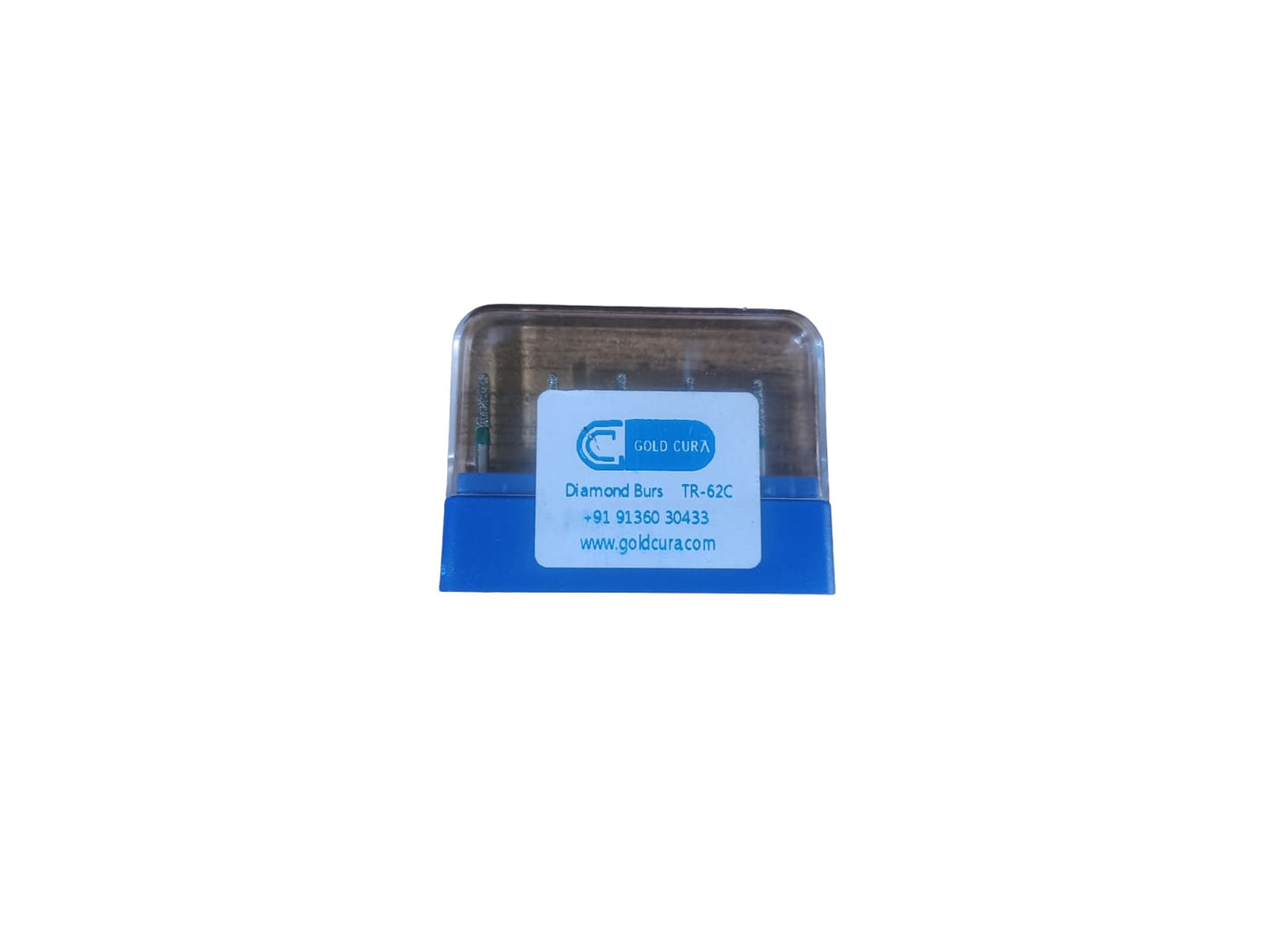
Gold Cura Green Coarse Diamond Burs FG – C Series, Pack of 5
In stock
Couldn't load pickup availability
In stock. Estimated delivery within 4–5 working days.
Quick Answer
Green coarse FG diamond burs for rapid initial reduction and gross crown, cavity, axial or margin preparation. Choose one of 16 C-series profiles; pack of 5 identical burs.
Direct answer: Gold Cura Green Coarse Diamond Burs FG are friction-grip dental diamond burs designed for efficient initial tooth reduction, gross contouring, crown and bridge preparation, cavity shaping and removal of surface irregularities before standard or fine finishing. Choose from 16 C-series profiles. Each order contains 5 identical burs of the selected code.
Green Coarse Diamond Burs FG: Key Facts
| Bur category | Coarse-cutting dental diamond burs |
|---|---|
| Available codes | EX-11C, EX-25C, SF-11C, SF-12C, SF-13C, SF-41C, SI-47C, TF-13C, TF-15C, TR-11C, TR-12C, TR-13C, TR-14C, TR-26C, TR-28C and TR-62C |
| Shape families | Special/occlusal, pear, straight flat-end, inverted cone, taper flat-end and taper round-end |
| Grit category | Coarse / C-series; commonly identified by a green ring in dental bur catalogues |
| Shank type | FG / friction grip |
| Compatible handpiece | Compatible high-speed friction-grip dental handpiece |
| Pack size | 5 identical burs of the selected code |
| Primary role | Initial reduction, gross shaping and preparation before subsequent finishing |
| Intended user | Trained dental professionals |
What Does C Mean in a Diamond Bur Code?
C commonly denotes a coarse abrasive grade. Coarse diamond burs remove tooth structure or restorative material faster than standard and fine diamonds, making them useful during the early preparation stage. Green colour coding is widely used for coarse dental diamonds. Exact grit size, colour band, dimensions, maximum speed and processing instructions can vary by manufacturer; confirm the Gold Cura specification supplied with the selected bur.
When Should a Green Coarse Diamond Bur Be Used?
- Initial crown and bridge preparation
- Gross occlusal, axial or proximal reduction
- Rapid contouring before margin refinement
- Inlay and onlay preparation where the selected shape is appropriate
- Opening or enlarging preparation forms according to clinical judgement
- Removing pronounced surface irregularities before standard or fine finishing
- Selected restorative or CAD/CAM preparation procedures according to material-specific guidance
Coarse burs are intended primarily for efficient reduction. They should normally be followed by an appropriate standard, fine or extra-fine instrument when a smoother preparation surface or more precise margin is required.
When to Use Each Green Coarse Bur Size and Shape
Important: choose the head geometry first, then choose the relative size within that shape family. The number is not one universal small-to-large scale across EX, SF, SI, TF and TR codes. Use the smallest profile that safely contacts the intended surface and produces the required preparation without unnecessary reduction.
| Code | Shape and relative profile | When to use it |
|---|---|---|
| EX-11C | Large double-cone / special occlusal profile | Use for rapid occlusal reduction, opening broad occlusal anatomy and initial shaping where a large double-conical head follows the working area. Best suited to broad surfaces with adequate access. |
| EX-25C | Pear-shaped coarse profile | Use for occlusal and cavity shaping, rounded internal contours, selected inlay/onlay preparations and gross reduction where a pear form follows the intended anatomy. |
| SF-11C | Long, narrow straight flat-end cylinder | Use for conservative axial reduction, narrow straight walls, shoulder-style preparation and creating a controlled flat terminal surface in areas with limited width. |
| SF-12C | Long, medium straight flat-end cylinder | Use as a general-purpose straight cylinder for axial-wall reduction, shoulder preparation and broad flat-surface shaping when more working width is required than SF-11C. |
| SF-13C | Long, wider straight flat-end cylinder | Use for broad axial surfaces, larger teeth and more substantial shoulder preparation where a wider cylindrical cutting surface improves efficiency. |
| SF-41C | Short, compact straight flat-end cylinder | Use for localised flat-floor or shoulder preparation, short axial surfaces and confined areas where a compact cylinder provides better control than a long head. |
| SI-47C | Single inverted-cone profile | Use for selected cavity floors, retention features, undercut creation and internal preparation shaping where an inverted cone is clinically indicated. Avoid using it as a general axial-reduction bur. |
| TF-13C | Medium taper flat-end profile | Use for tapered axial reduction, flat-end shoulder or butt-joint preparation, inlay/onlay walls and margin formation where a moderate taper is desired. |
| TF-15C | Broader taper flat-end profile | Use for larger posterior teeth, wider axial surfaces and more substantial flat-end shoulder preparation where additional cutting width is useful. |
| TR-11C | Long, slender taper round-end profile | Use for conservative crown preparation, narrow axial surfaces, smaller teeth and long walls where a slim rounded taper limits unnecessary reduction. |
| TR-12C | Long, medium taper round-end profile | Use for general axial reduction, rounded internal transitions and chamfer-style preparation when more width is required than TR-11C. |
| TR-13C | Medium-width taper round-end profile | Use as a versatile crown-preparation bur for axial walls, rounded transitions, margins and selected CAD/CAM or inlay preparations. |
| TR-14C | Broad taper round-end profile | Use for large posterior teeth, broad axial surfaces and preparations requiring faster, more substantial reduction with a rounded-end taper. |
| TR-26C | Long, medium taper round-end profile | Use for elongated axial walls, long crown preparations and broad controlled reduction where additional reach is useful. |
| TR-28C | Slender, narrow taper round-end profile | Use for narrow access, conservative proximal or axial reduction and smaller preparations where a fine-diameter rounded taper provides control. |
| TR-62C | Shorter round-end taper / chamfer profile | Use for shorter axial surfaces, depth-orientation work, occlusal-rest or cavity preparation and chamfer-style reduction where a compact tapered profile is preferred. |
Simple selection rule: EX for occlusal or special shaping, SF for straight flat-ended walls and shoulders, SI for inverted-cone internal features, TF for tapered flat-ended walls and shoulders, and TR for tapered walls with rounded transitions or chamfer-style margins.
Shape-Family Comparison
| Family | Head geometry | Typical coarse-cutting role |
|---|---|---|
| EX | Special shapes including double-cone and pear | Occlusal reduction, cavity shaping and broad internal contouring |
| SF | Straight cylinder with flat end | Axial-wall reduction, shoulder preparation and flat terminal surfaces |
| SI | Single inverted cone | Internal cavity features, flat floors and selected retention forms |
| TF | Tapered body with flat end | Tapered walls, shoulder or butt-joint margins and inlay/onlay preparation |
| TR | Tapered body with rounded end | Crown preparation, axial reduction, rounded transitions and chamfer-style margins |
Coarse, Standard, Fine and Extra-Fine: Which Comes First?
| Stage | Primary purpose | Typical position |
|---|---|---|
| Coarse / green | Fast initial reduction and gross contouring | Early preparation stage |
| Standard | General shaping and controlled preparation | Initial or intermediate stage |
| Fine | Margin refinement, contour correction and surface smoothing | After primary shaping |
| Extra-fine or polishing system | Final scratch reduction and material-specific finishing or polishing | Final stage where indicated |
How to Choose and Use a Coarse Diamond Bur
- Identify the preparation surface. Decide whether the procedure needs occlusal, straight-wall, inverted-cone, flat-end taper or round-end taper geometry.
- Select the minimum suitable profile. Narrower burs favour conservative access; wider burs can reduce broad surfaces more evenly.
- Plan the finishing sequence. Coarse reduction should not be confused with final margin or surface finishing.
- Use light, controlled pressure. Excessive force can generate heat, cause bur deflection or remove unnecessary tooth structure.
- Use suitable cooling and intermittent contact. Follow the supplied instructions and the clinical requirements of the tooth or restorative material.
- Maintain the intended path of insertion. Do not allow a large head to unintentionally increase taper or alter the finish line.
- Inspect before use. Do not use a bur that is bent, damaged, corroded, worn or does not seat securely in the handpiece.
- Continue with the correct finishing instrument. Use a standard, fine or extra-fine bur or material-specific polishing system when indicated.
Grit, Dimensions, RPM and Sterilisation Guidance
Comparable dental-bur catalogues commonly define coarse green-band instruments as a high-removal category, but exact grit, head diameter, working length, maximum allowable speed, sterilisation cycle and reuse limit vary by manufacturer and code. Do not apply another brand’s dimensions or RPM limits to Gold Cura burs. Confirm the information printed on the Gold Cura packaging or supplied instructions.
- Use only in a compatible FG high-speed handpiece.
- Confirm secure seating before operation.
- Use appropriate water cooling, light pressure and intermittent contact.
- Follow the restorative-material manufacturer’s preparation protocol.
- Follow the supplied cleaning, disinfection, sterilisation, reuse and replacement instructions.
- Replace a bur that is visibly worn, bent, damaged, corroded or no longer cuts efficiently.
Frequently Asked Questions
What are green coarse diamond burs used for?
They are used for efficient initial tooth reduction, gross shaping, crown and bridge preparation and removing pronounced surface irregularities before finer finishing.
What does C mean in the bur code?
C commonly indicates coarse grit. The letters before the number identify the shape family, while the number identifies the profile within that family.
Why are coarse diamond burs colour-coded green?
Green is a widely used ISO-style catalogue colour for the coarse abrasive category. Confirm the actual Gold Cura band and grit specification from the supplied product information.
How many burs are included?
Each pack contains five identical burs of the selected code.
Is this a mixed assortment?
No. Select one code and the pack contains five burs of that selected profile.
Which code is best for occlusal reduction?
EX-11C is suited to broad occlusal reduction, while EX-25C provides a pear-shaped profile for rounded occlusal and cavity contours.
Which codes are used for shoulder preparation?
SF codes provide a straight flat-end cylinder, while TF-13C and TF-15C provide a tapered flat-end profile. Select according to the intended wall taper and margin design.
Which code is used for retention or an inverted-cone preparation?
SI-47C is the single inverted-cone option for selected internal cavity and retention features.
What is the difference between TR-11C, TR-12C, TR-13C and TR-14C?
They are taper round-end profiles with different relative widths and working forms. TR-11C is the more conservative slender option, TR-12C and TR-13C suit general preparation, and TR-14C is broader for larger surfaces.
What is the difference between TR-26C, TR-28C and TR-62C?
TR-26C is a longer medium round-end taper, TR-28C is slender for narrow access, and TR-62C is a shorter compact round-end taper or chamfer profile.
Can coarse burs be used for final finishing?
They are primarily reduction instruments. A standard, fine, extra-fine or material-specific polishing instrument is normally required when a smoother surface or precise final margin is desired.
Which handpiece is required?
These are FG or friction-grip burs for a compatible high-speed dental handpiece.
Can these burs be used on zirconia or metal restorations?
Use on restorative materials only when supported by the supplied bur instructions and the restoration manufacturer’s protocol. Do not assume every coarse dental diamond is indicated for every material.
Can green coarse diamond burs be sterilised and reused?
Follow the cleaning, disinfection, sterilisation, reuse and replacement instructions supplied with the product. Do not assume a cycle or reuse limit that is not stated in those instructions.
Related Gold Cura Dental Burs
- Dental Burs & Bur Kits
- Black Super-Coarse Diamond Burs
- Fine Finishing Diamond Burs FG
- Extra-Fine / Polishing Diamond Burs FG
- Taper Round Diamond Burs FG
- Taper Flat-End / Tapered Fissure Diamond Burs FG
- Taper Conical Diamond Burs FG
Professional-use dental instrument. Confirm the selected shape, abrasive grade, dimensions, handpiece compatibility, clinical indication and supplied processing instructions before use.
Browse related products: Dental Diamond Burs.
Need help selecting a bur? Use the Dental Diamond Bur Shapes Selection Guide to compare round, tapered, conical, finishing and coarse profiles.
Why Dentists Choose This Product
- Green coarse FG diamond burs for rapid initial reduction and gross crown, cavity, axial or margin preparation. Choose one of 16 C-series profiles; pack of 5 identical burs.
- Compatibility: For a suitable high-speed FG / friction-grip dental handpiece. Coarse burs are primarily reduction instruments; use an appropriate finer finishing sequence where indicated.
- Package: 1 × pack containing 5 items as specified
Delivery and Returns
Estimated delivery is within 4–5 working days. Eligible return requests must be raised within 24 hours of delivery and remain subject to Gold Cura’s return policy. Used, contaminated, opened hygiene-sensitive or sterilized items are not returnable.